Designing a Personalization-First Fashion Experience for Rental Subscription Platfrom
Strategy
Product Design
Visual Design
Service Design
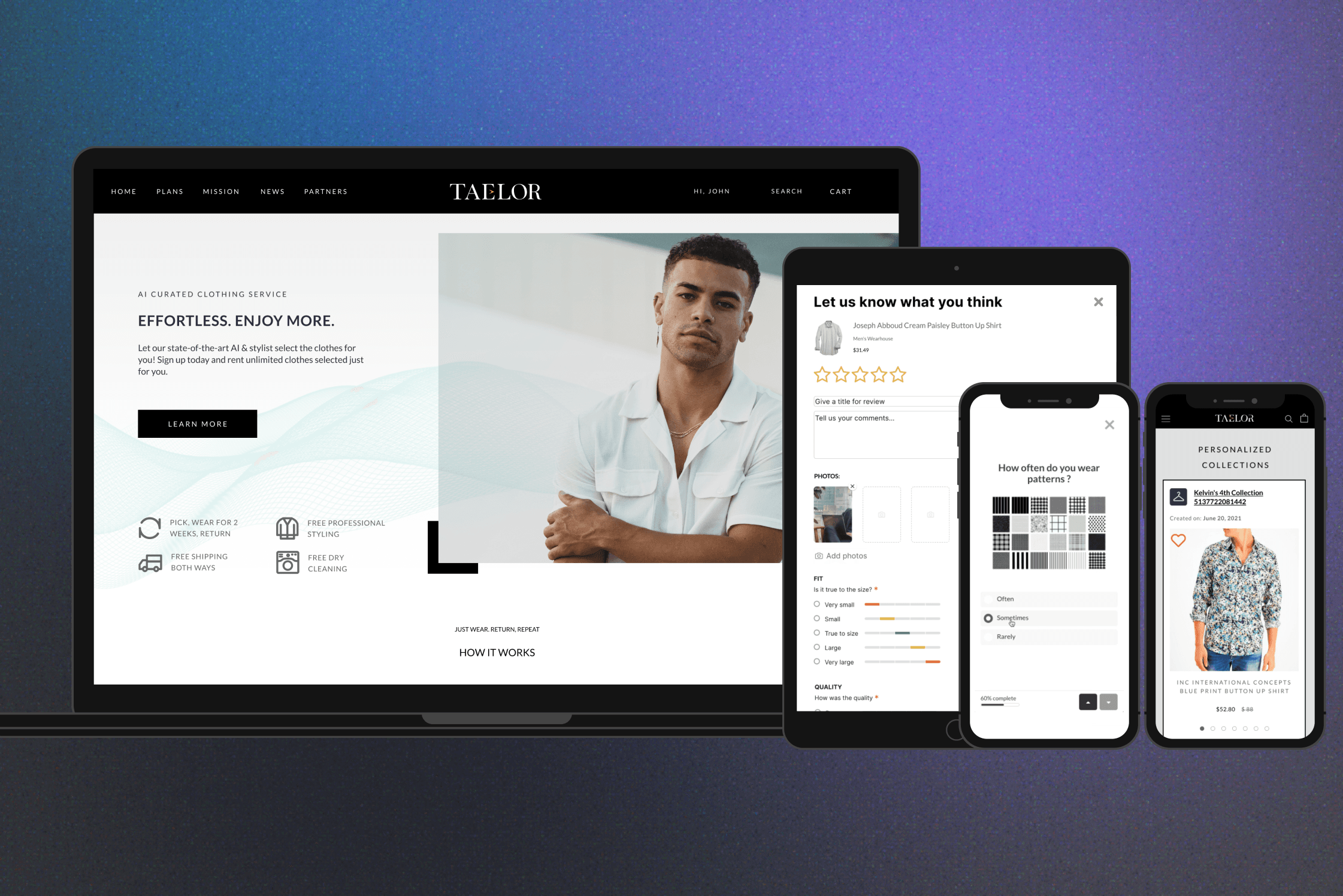
overview
The U.S. men’s online apparel market represents over $60B in annual spending, yet nearly one-third of target users struggle with knowing what looks good on them.
The challenge wasn’t recommendation accuracy alone. It was capturing high-quality preference signals early enough to make personalization feel trustworthy, while operating under tight go-to-market and operational constraints.
Role
Founding Product Designer (0→1) owned research, driving product vision, and execution across responsive web, brand, and service experience. Led discovery through validation and partnered closely with the CEO, PM, engineers, marketing, and operations to define customer experience strategy, evaluate trade-offs, and ship the MVP and service experience.
Timeline
May 2020 - Aug 2021; Multiple releases
Industry
SaaS Circular fashion
E-commerce
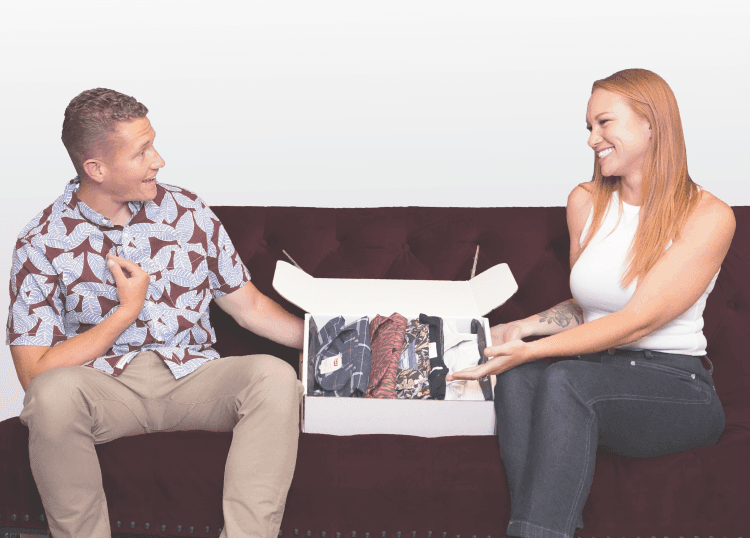
Approach
Find the right Problem
Early research uncovered that styling support was the most underserved need.
A significant segment of users primarily wanted help figuring out what to wear, without shopping in-store or spending excessive time browsing. Other insights validated interest in rental and subscription models, but styling confidence emerged as the core unmet need.
Diverge → Converge → Prioritize → Hypothesize
The project began with direct observation and user conversations. I structured multi-phase research to uncover underserved needs and help the team to define the right MVP opportunity.
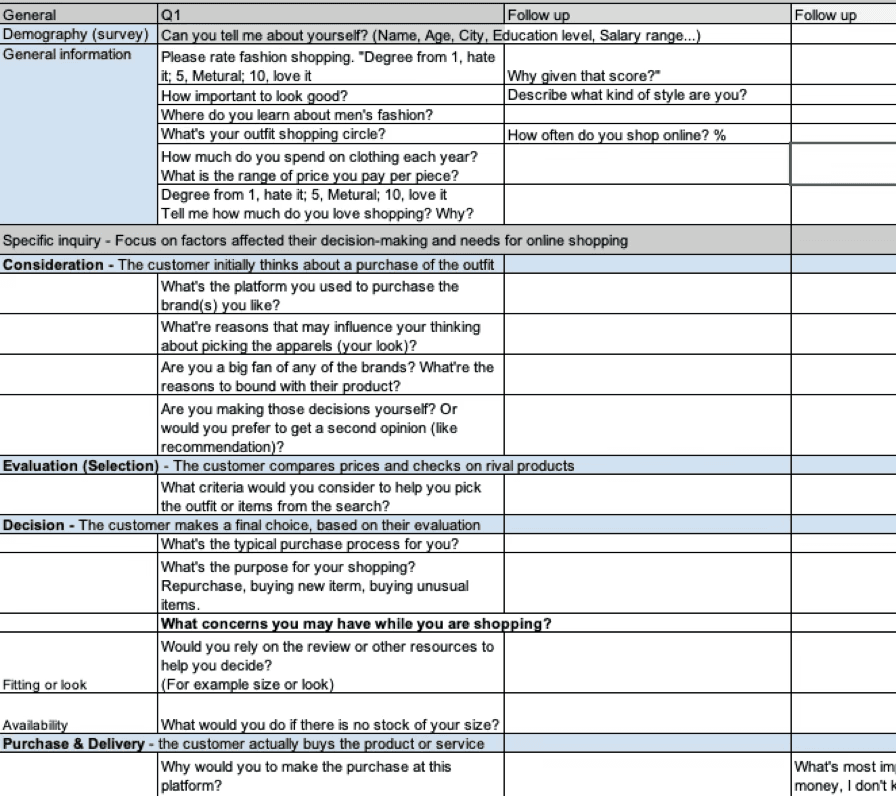
Interviews
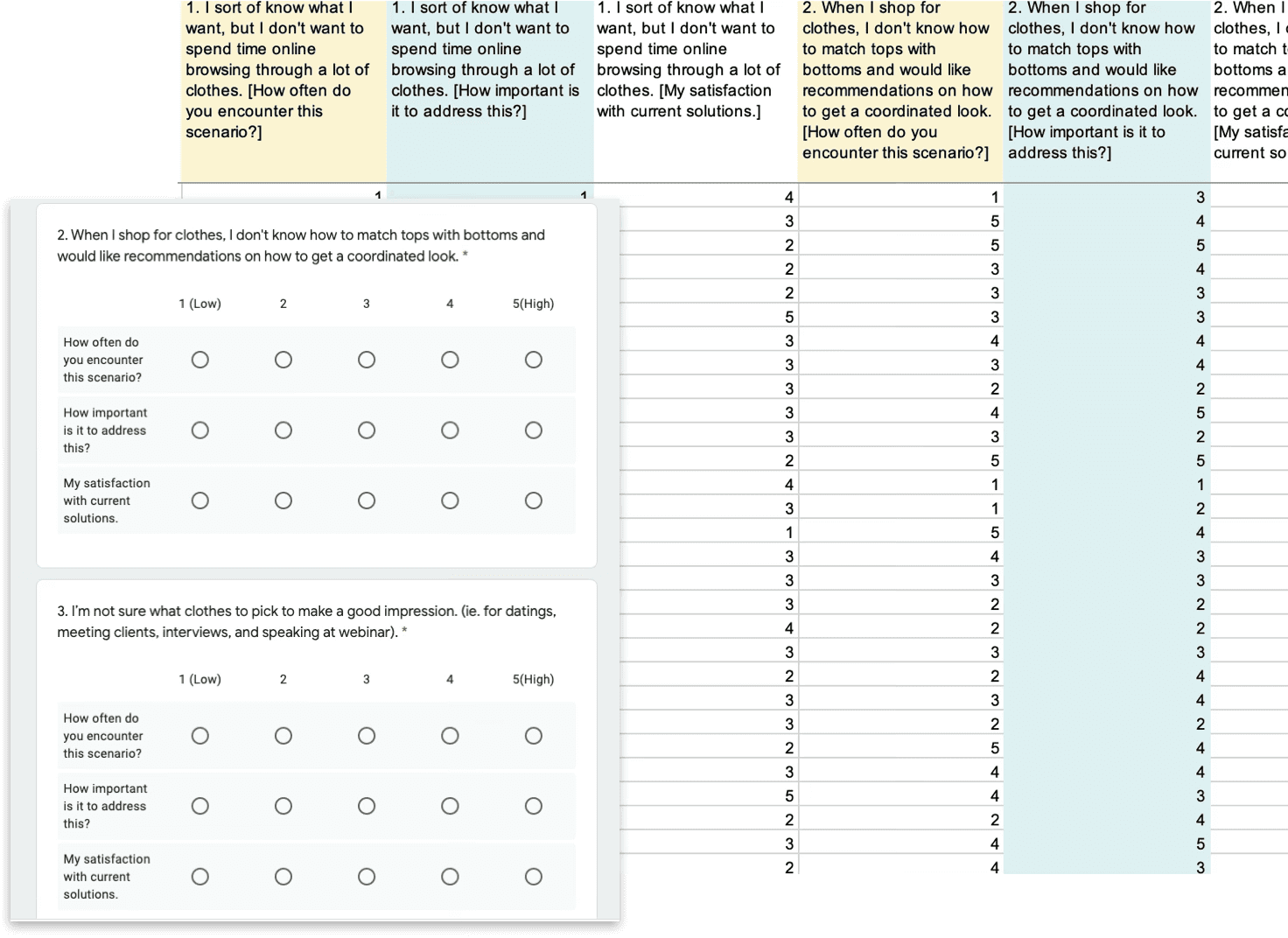
Survey (triple tech, JTBD)
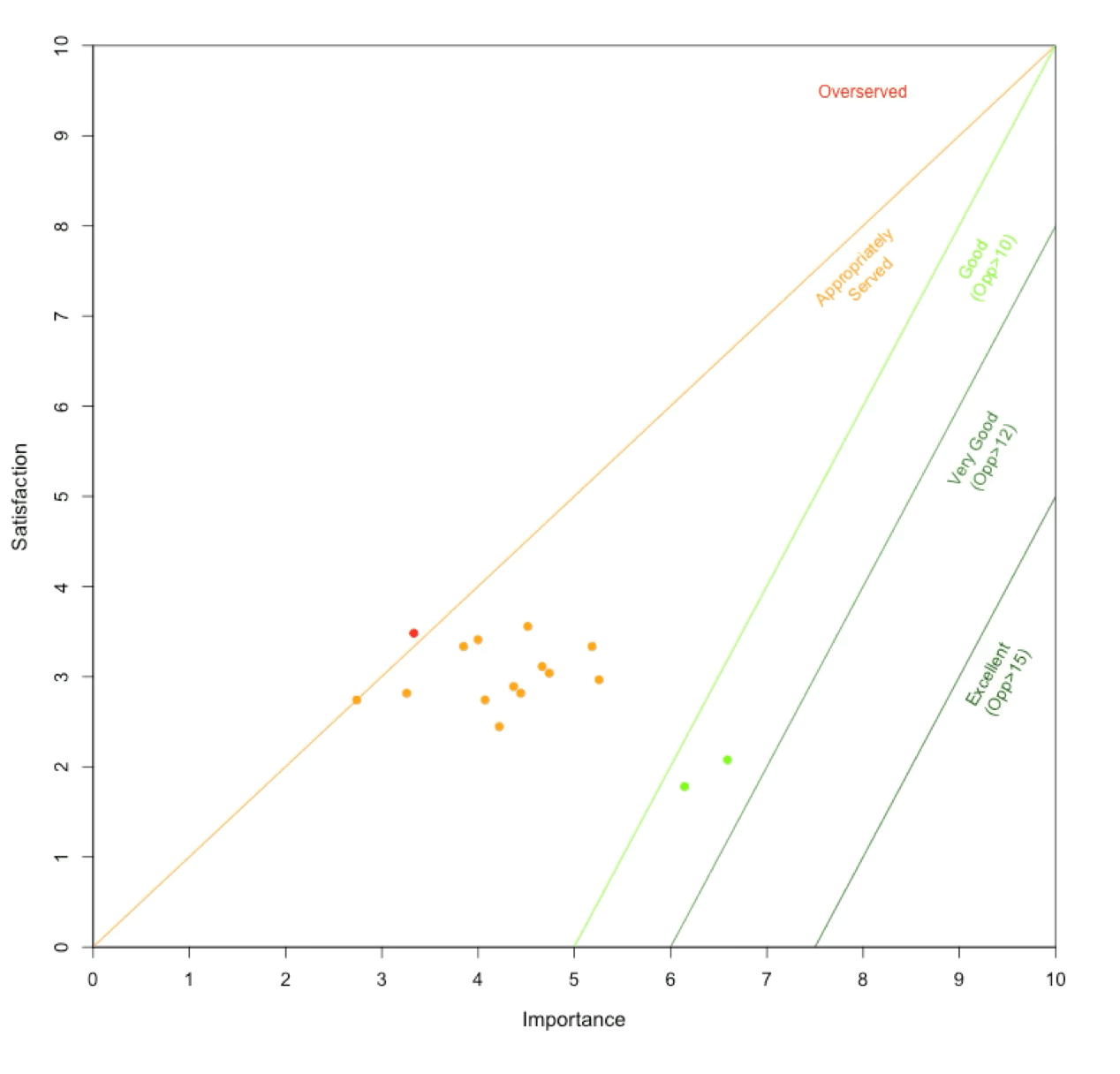
Opportunity map
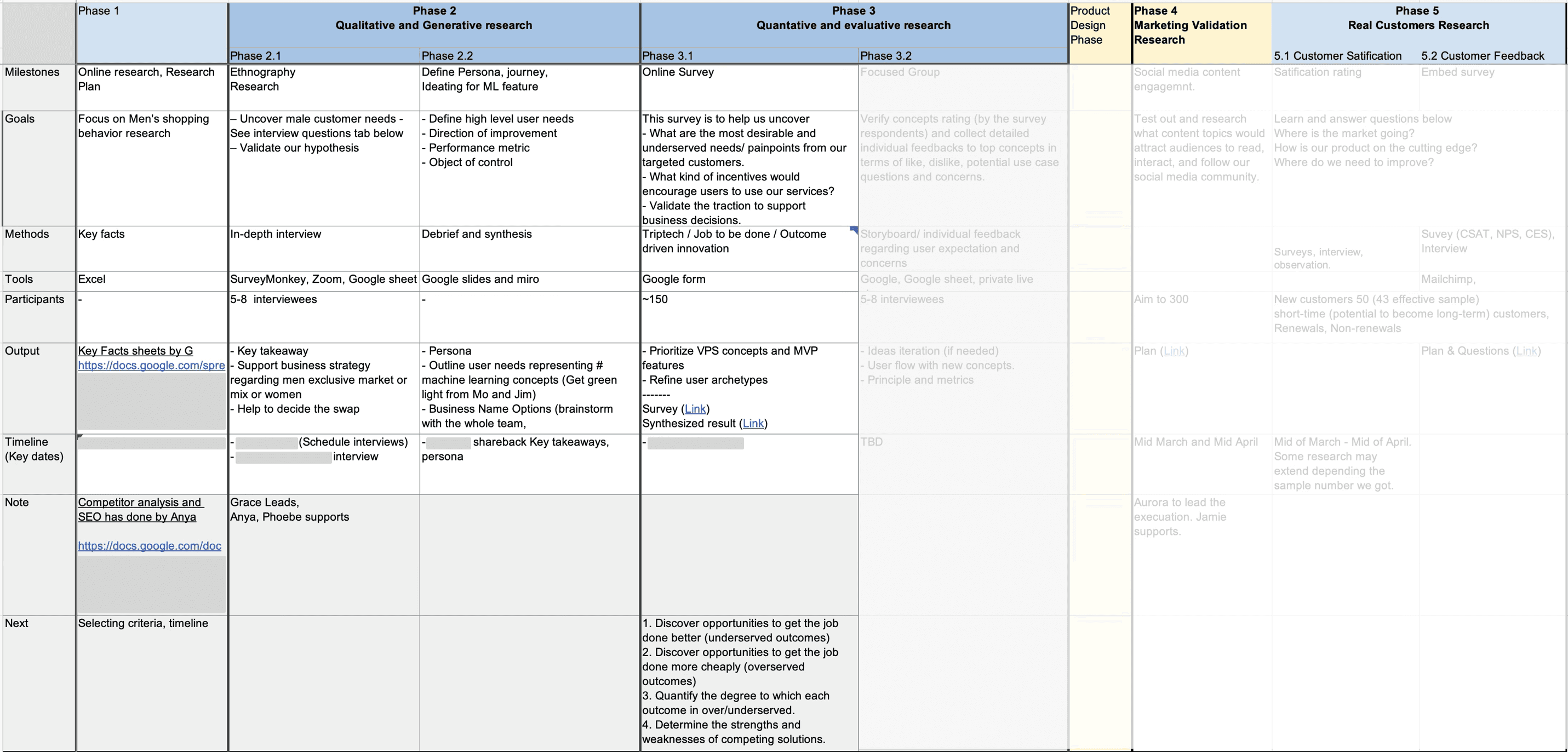
Research plan roll out and management
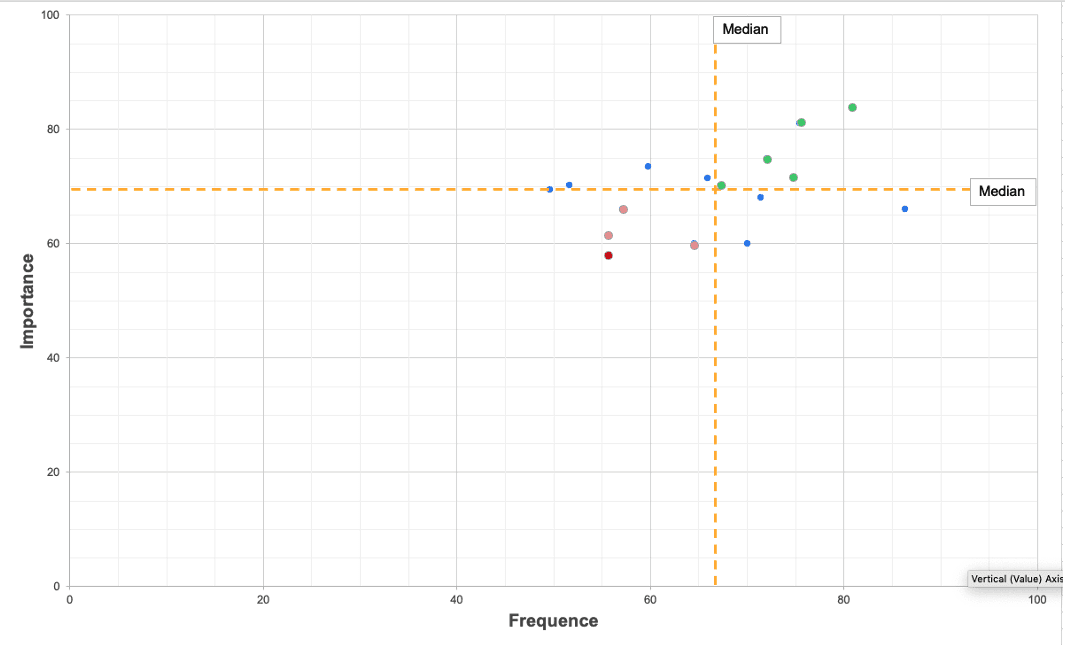
Prioritization
💡 Not just “rent clothes” — but reduce decision fatigue and build styling confidence.
Core Question: How might we design a system where user inputs, constraints, and feedback loops work together to produce confident personalization from day one?
Through designing concept, focused prototyping and testing different recommendation approaches, we discovered that:
Low conversion was not driven by inventory breadth or visual design.
It stemmed from low confidence in recommendation relevance.
Users experienced high cognitive effort during self-exploration.
This led me to frame the product as a preference signal system, rather than a collection of isolated features — designing structured input capture, validation mechanisms, and reinforcement loops to improve personalization over time.
Ideation & testing
I created rapid prototypes to test multiple recommendation approaches:
In order to personalize the styling experience to curate right options to user, design and product team brainstormed numerous ideas for learn user information, and I created different fidelity level of prototypes to gather user feedback.
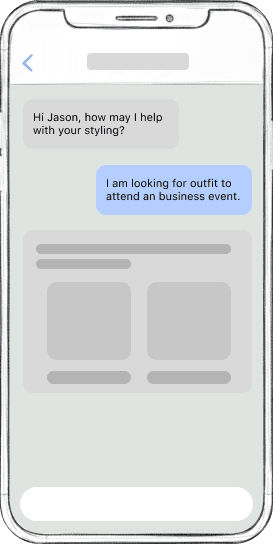
Chat Assistant
Deprioritized early — back-and-forth messaging created friction for first-time users.
Like/Unlike preference
Relied heavily on inventory browsing and still required significant effort from users.
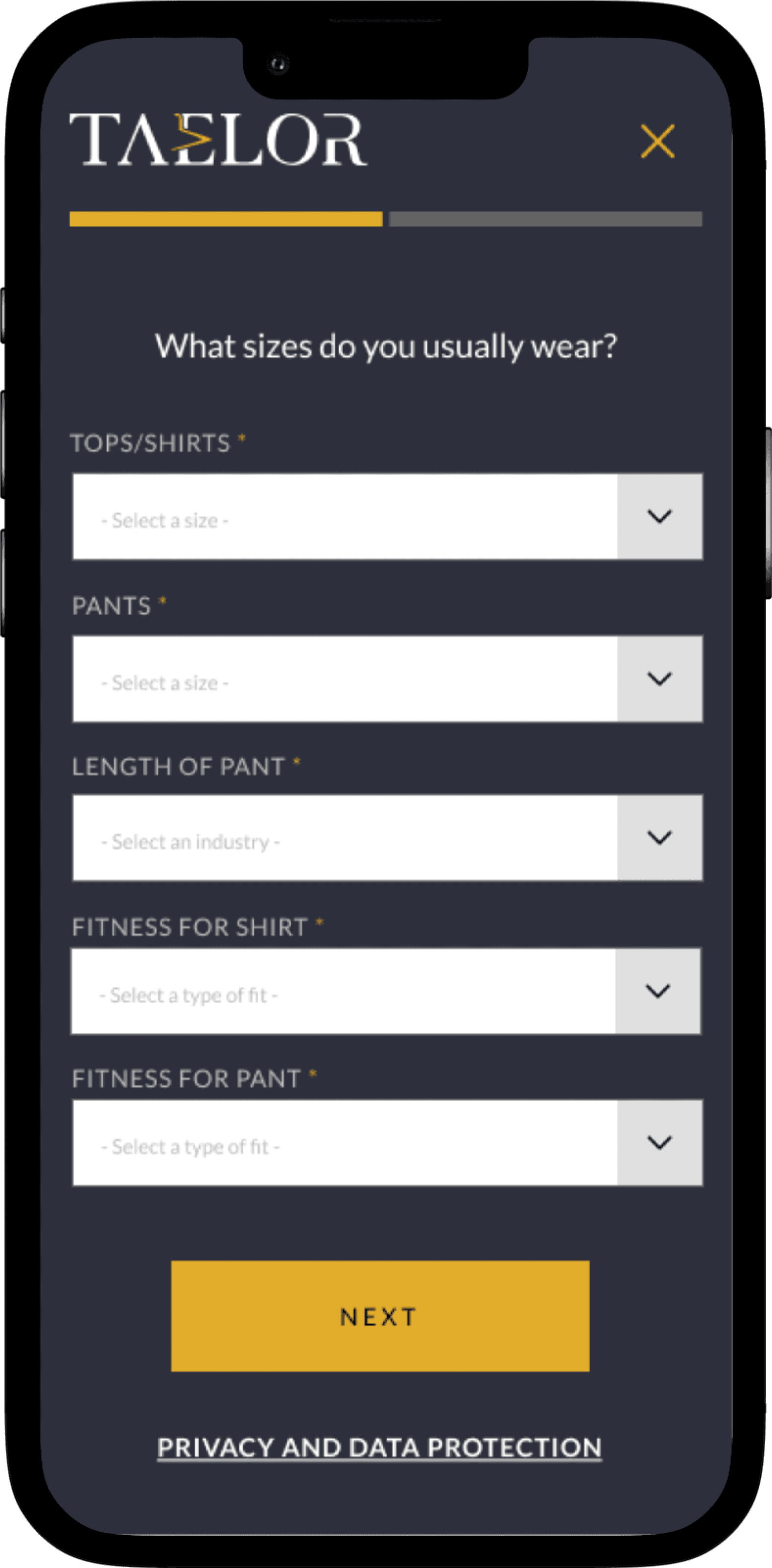
Quiz
Tested as part of a lead-generation flow and later extended into the product experience
💡 Failures weren’t about output quality. They stemmed from weak or ambiguous input signals captured too late in the journey. This reframed the problem from optimizing outputs to designing stronger input signals and confidence-building mechanisms.
Decision 1: Prioritize signal quality over onboarding speed
Rather than optimizing for the fastest possible onboarding typical of fashion subscription e-commerce, I designed onboarding as a guided preference discovery flow, accepting higher upfront effort to capture clearer, more discriminating preference signals.
Physical attributes
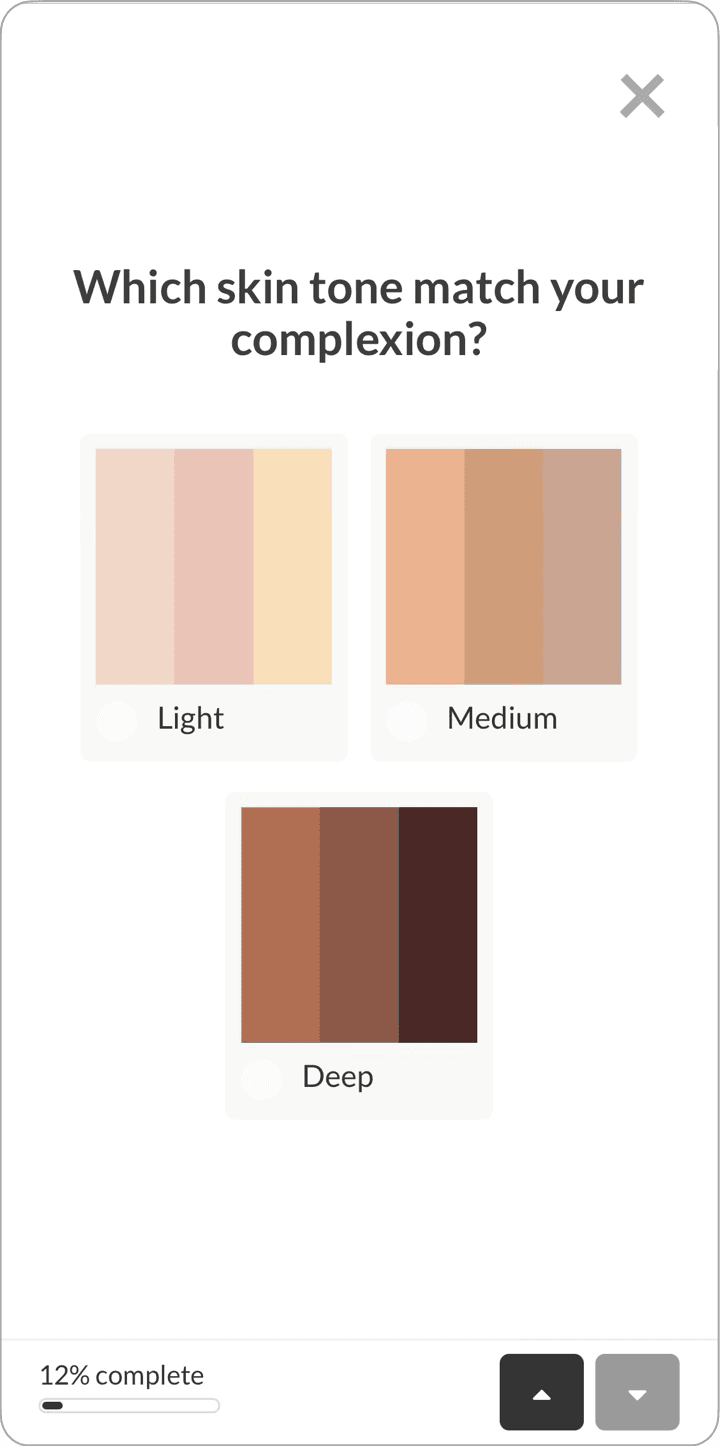
Quiz questions - Constrain what can work
Preference signals
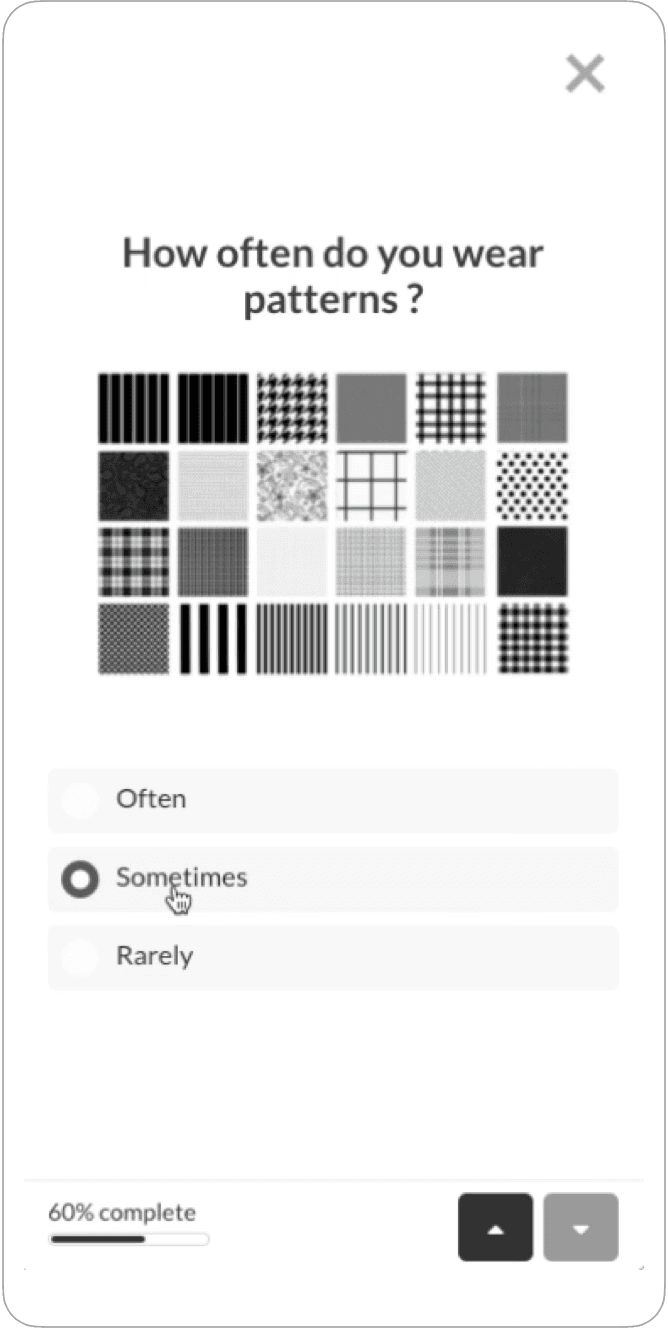
Quiz questions - Express intent and frequency
Behavioral feedback
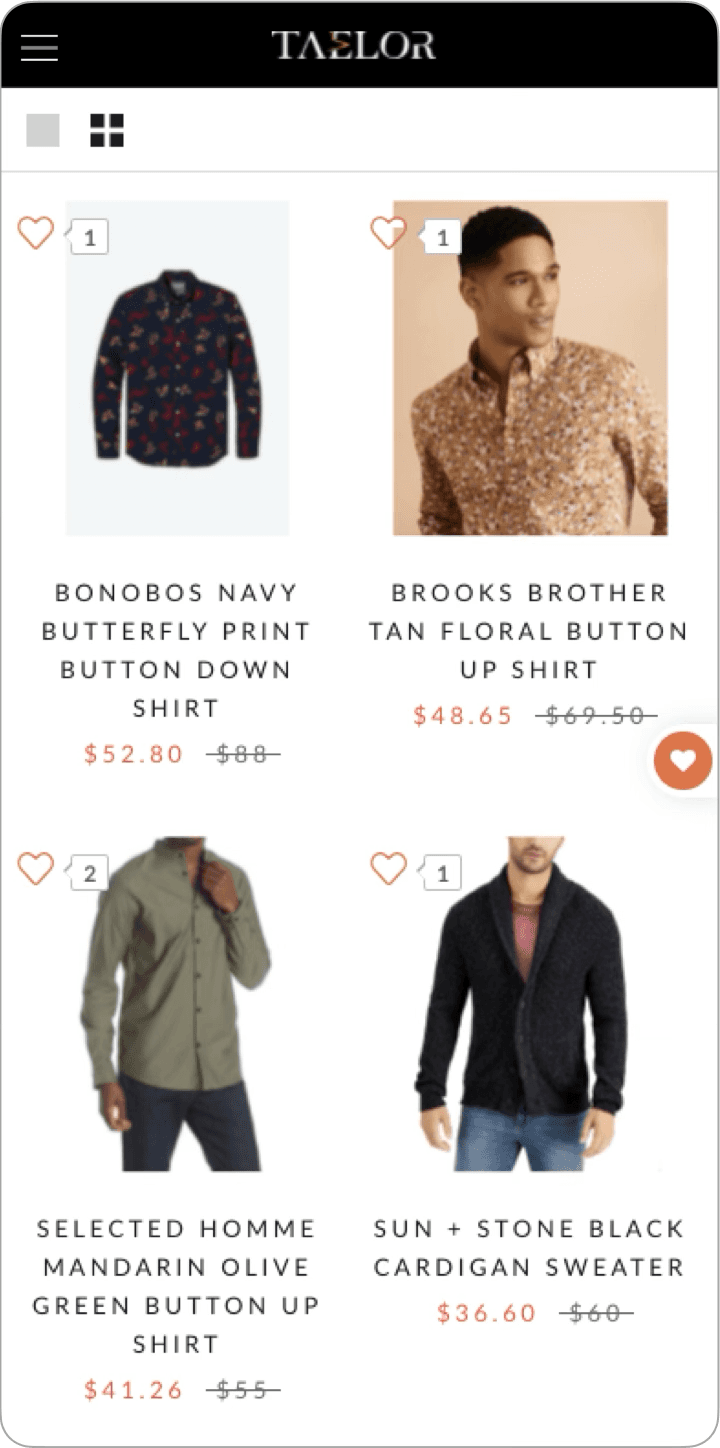
Reinforcement over time through likes, views
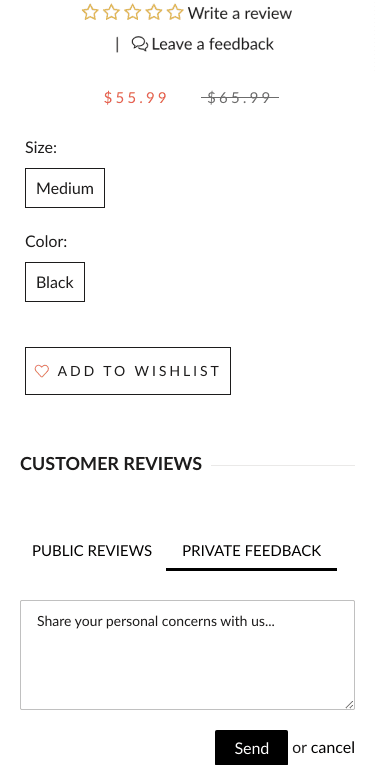
Reinforcement over time through feedback loops
💡 Trade-off: Higher-effort onboarding → higher-quality personalization and reduced early mistrust.
Decision 2: Use human judgment for ambiguous preferences
Even with higher-confidence preference signals, early-stage personalization remained ambiguous—particularly when user taste was still forming and data was incomplete. The subscription model provided recurring interaction, but the core design challenge was building a reliable signal loop, capture, validation, and reinforcement that could maintain trust while the system learned.
Rather than relying solely on automated inference, I partnered closely with PM, operations, and stylists to embed professional human judgment at moments of highest uncertainty.
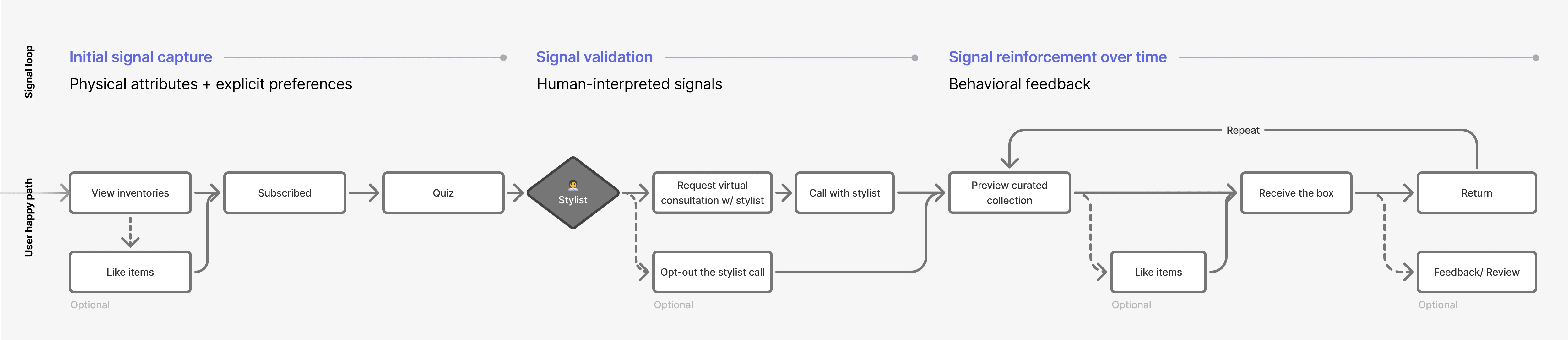
I explored two approaches for receiving professional input.
A stylist consultation early in onboarding proved most effective, helping interpret ambiguous preferences, validate early signals, and establish trust before automation scaled. This intervention improved recommendation quality while reinforcing user confidence at a critical first-touch moment.
Stylist consultation during onboarding
Signal validation (Human judgment)

Stylist consultation used to interpret edge cases and validate early preference signals. Professional judgment helped resolve ambiguity before system recommendations scaled.
Signal reinforcement (Operational view)
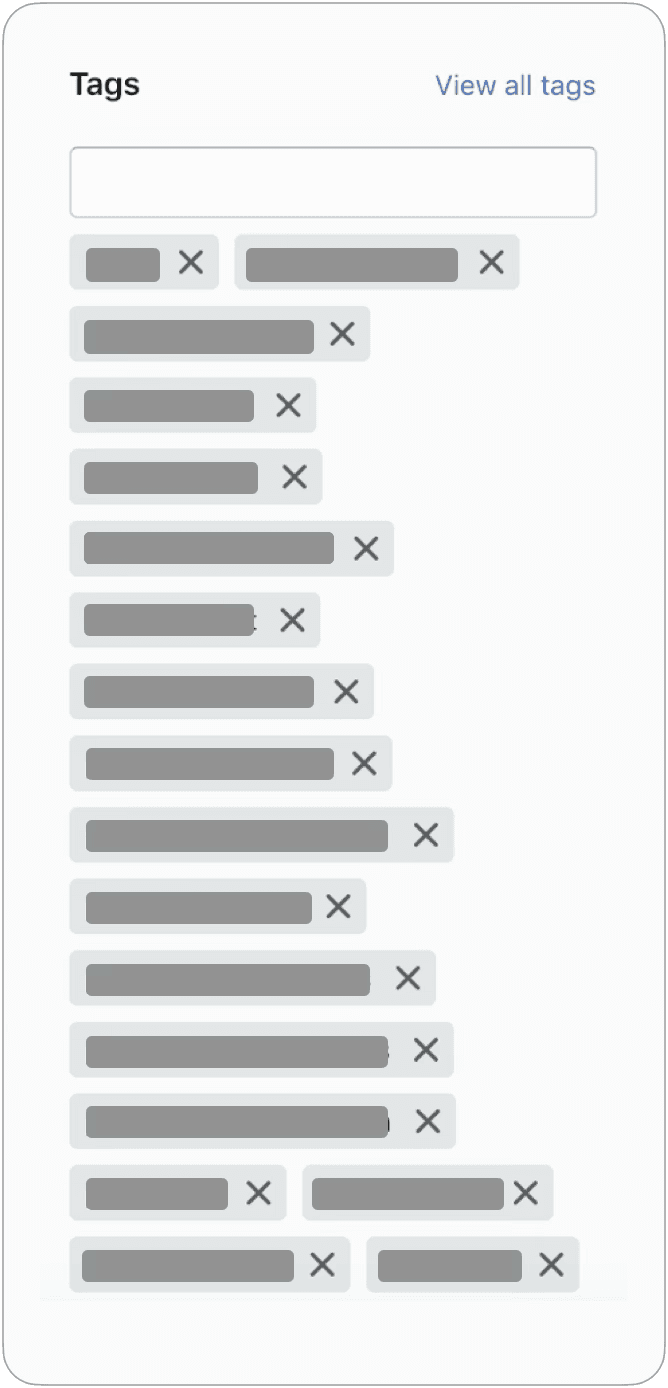
Operational tagging interface where stylists translated validated profile preferences into structured signals, reinforcing recommendation accuracy over time.
Learned personalization state
Learned personalization state
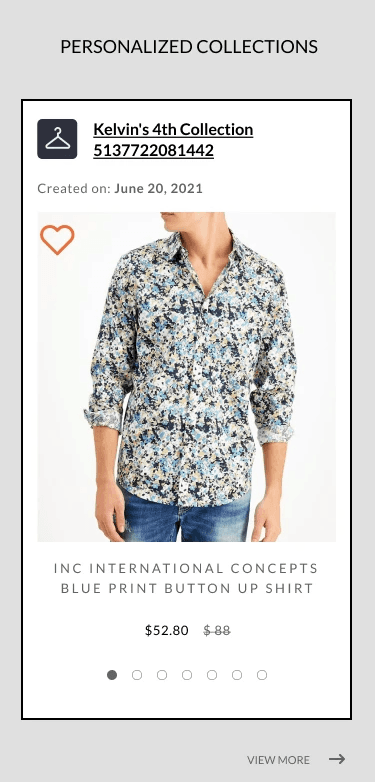
Personalized collections generated from accumulated signals—combining explicit input, human validation, and behavioral feedback—used to inform subsequent recommendations and shipments.
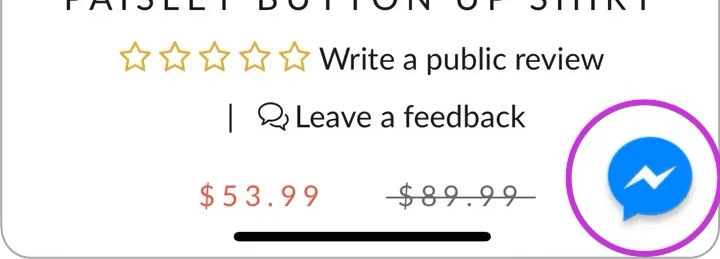
Online assistant chat (Disabled after a month of testing)
In practice, user primarily used for customer care, troubleshooting, and issue resolution rather than preference refinement. Based on this learning, we deprioritized the assistant as personalization and refocused human involvement where it had the highest impact.
Signal validation
💡 Trade-off: Increased operational complexity → higher trust and more reliable personalization during early learning phases.
Personalization logic alone wasn’t enough—the broader service system had to reinforce it.
Service & site experience iteration
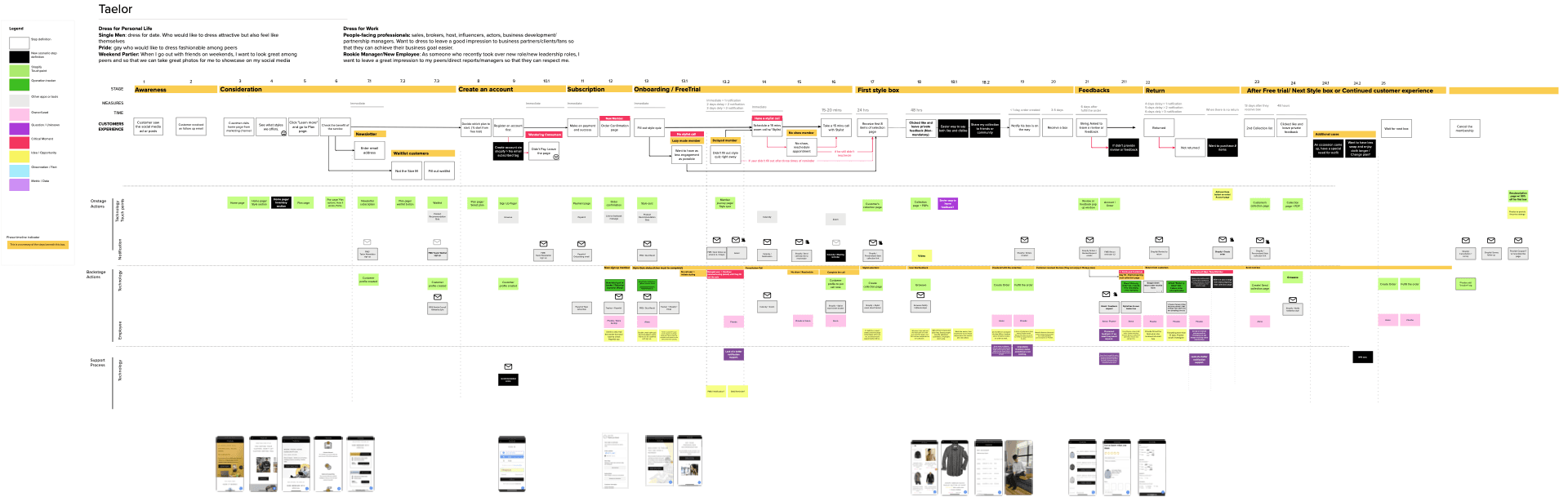
We piloted the full journey, from sign-up to swap cycle, to test our hypothesis for the next swap, return, and keep/purchase the item.
I facilitated cross-functional workshops using a service blueprint to align teams on customer insights and prioritize improvements. This iteration enhanced swap flow, tracking, notifications, and feedback collection.
Subscribed customers appreciated the streamlined experience, making it easier to manage rental orders, view recommendations, and track items with clear status updates.
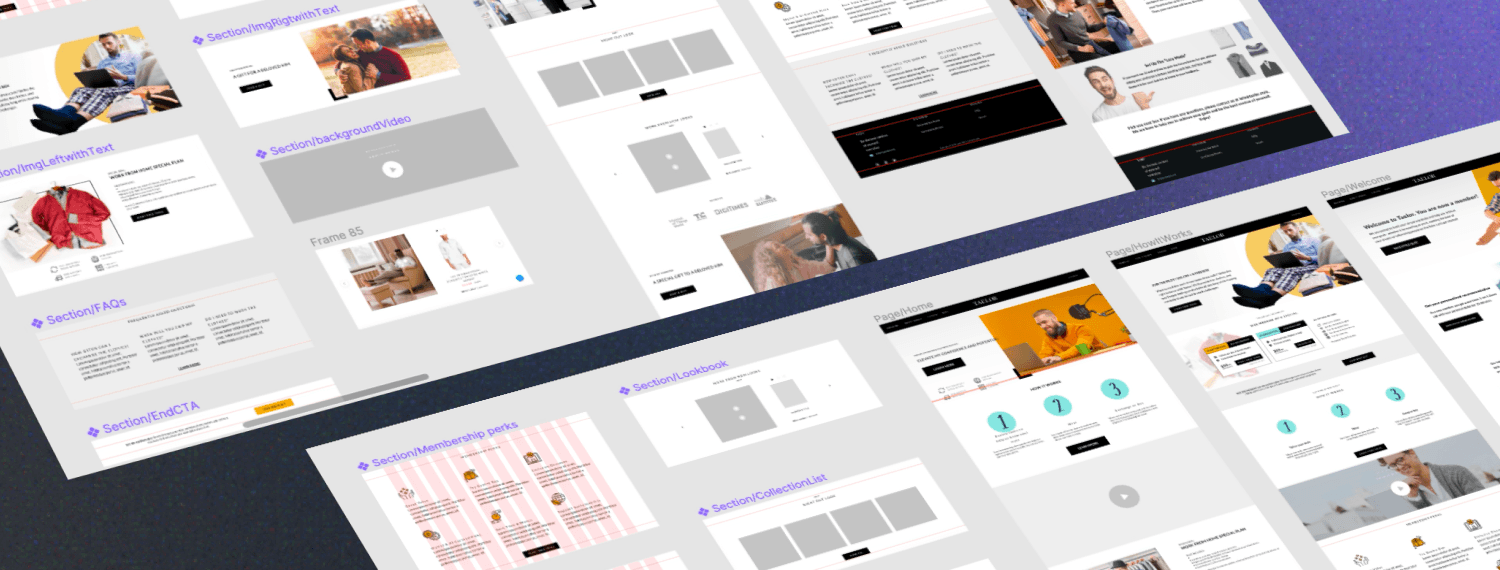
Brand IDENTITY AND design system
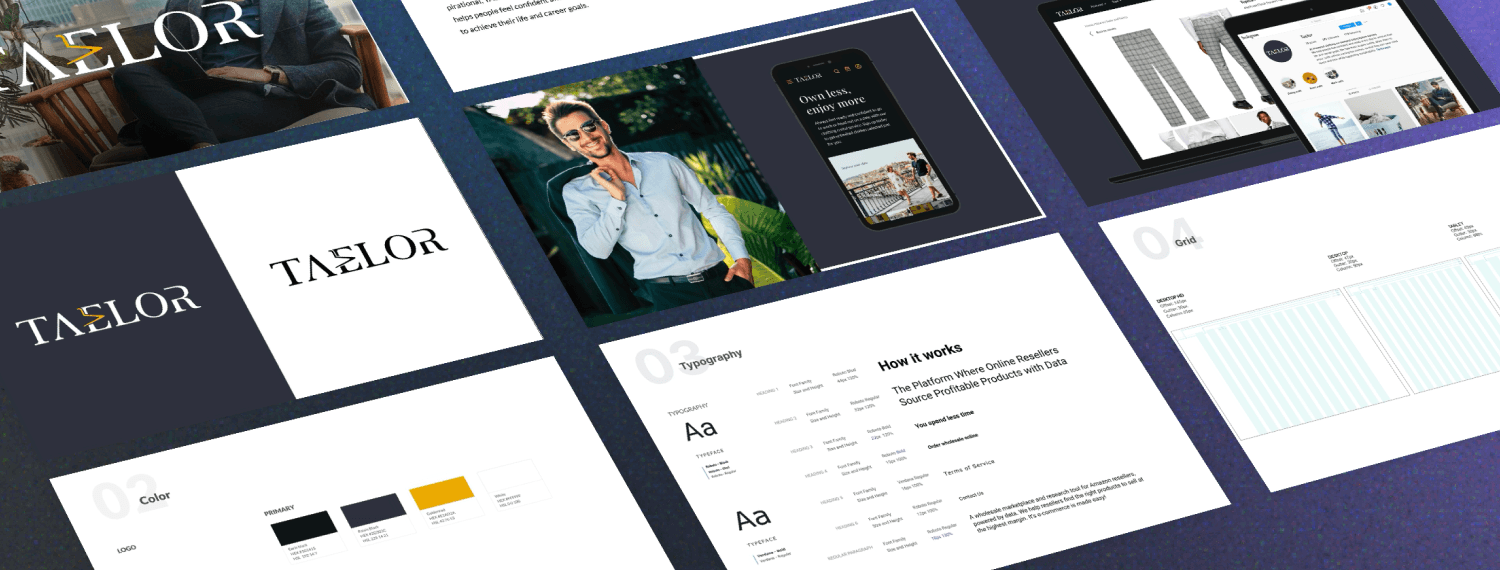
I led the creation of the brand identity and foundational design system while building the product from 0→1, aligning founders, product, and marketing around a shared experience vision. I translated brand principles into a modular system of reusable components that enabled fast iteration while maintaining consistency across acquisition, onboarding, and personalization. This system became a single source of truth for design and engineering, reducing handoff friction and supporting scale as the product matured.
Result
The launch validated the core strategy of prioritizing preference signal quality over feature completeness.
Within four months, user engagement and satisfaction metrics indicated that deeper onboarding and human-in-the-loop personalization improved trust in recommendations, even with a limited initial inventory.
200+
First-time subscriber
/ Recorded 4 months
800+
style quiz filled /
4 months
8 / 10
NPS score
28%
reduction in onboarding bounce rate
Qualitative feedback reinforced that members felt more confident trying new styles when recommendations were guided and contextualized. External media coverage further validated the differentiated personalization approach.
“ I found myself in a slump and in need of “leveling up” my clothing game. Too often I found myself “settling” and being comfortable just wearing the “same old thing.” I was in need of some help. Taelor was just the thing. With their smart system of matching your style and mixing in new things to try, I always found myself feeling confident and rejuvenated with my outfit. Taelor matches you with a personal “stylist” that is very responsive to your needs, and always just a text away.”

Customer review
Selected media coverage:
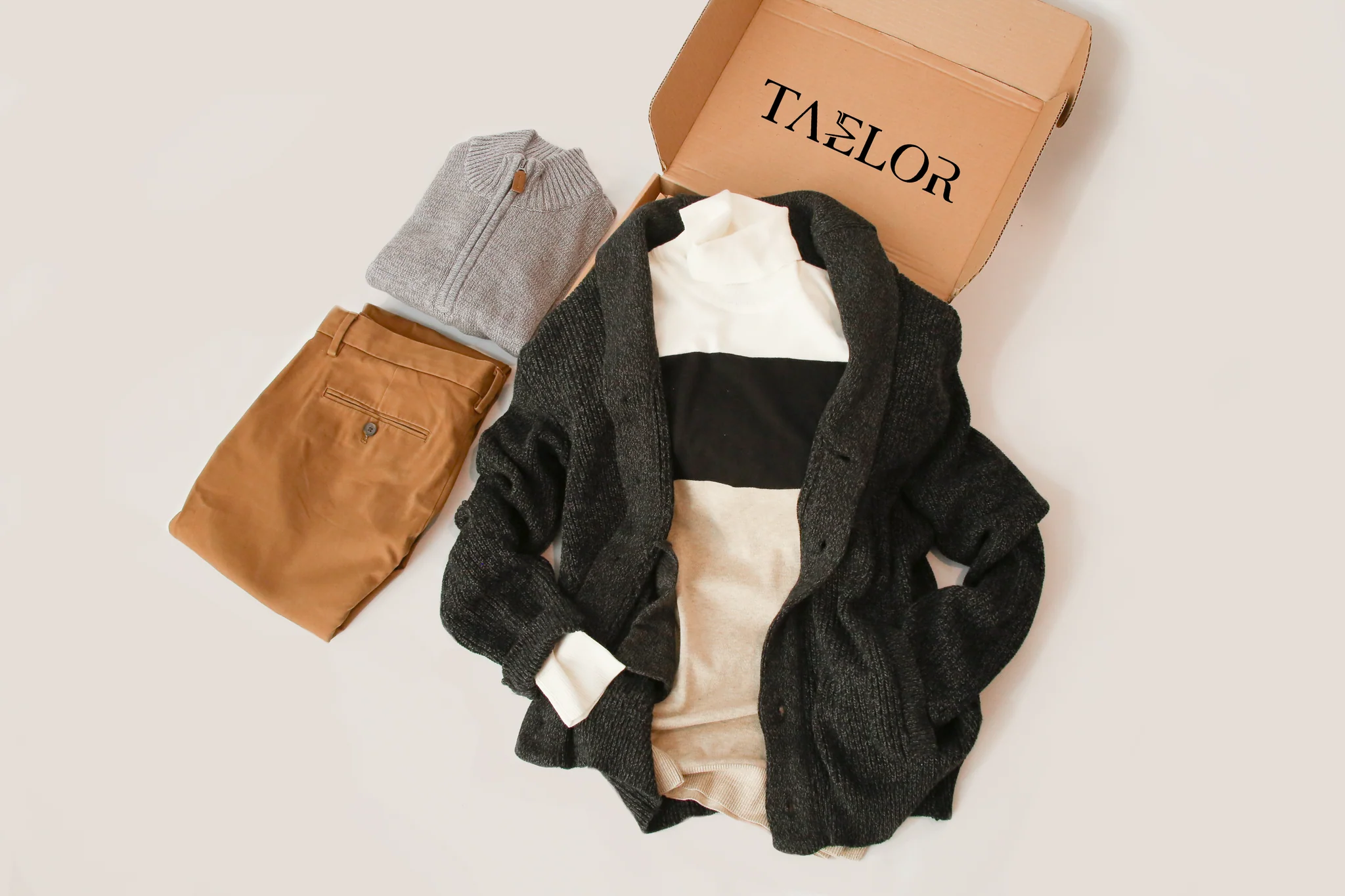

The validated product and service model contributed to securing $2.5M in funding, reinforcing investor confidence in the differentiated personalization strategy.
Reflection & Takeaways
Building a product from the ground up, and sustaining it with limited resources, was a powerful experience that stretched both creativity and execution. It was both fun and rewarding to connect digital and physical touchpoints into a cohesive customer journey. Here are a few high-level takeaways from a product design perspective:
Human-centered AI personalization: As we refined our data-driven personalization, I focused on balancing machine recommend with empathy—ensuring that even as AI evolves, human interaction remains essential to creating genuinely exclusive for personalization context.
Balancing feasibility and desirability : Startup constraints forced constant trade-offs. Not every feature shipped, but protecting the core value sharpened our focus. I learned to balance speed with product integrity, using constraints to clarify priorities and build trust through incremental progress.
Inclusiveness : While the initial focus was on menswear, we built personas that also represented anyone interested in wearing men’s clothing. This inclusive mindset shaped our language, visuals, and UX writing across the app and marketing, ensuring the experience felt welcoming and relevant to all users.
More Projects
Designing a Personalization-First Fashion Experience for Rental Subscription Platfrom
Strategy
Product Design
Visual Design
Service Design
overview
The U.S. men’s online apparel market represents over $60B in annual spending, yet nearly one-third of target users struggle with knowing what looks good on them.
The challenge wasn’t recommendation accuracy alone. It was capturing high-quality preference signals early enough to make personalization feel trustworthy, while operating under tight go-to-market and operational constraints.
Role
Founding Product Designer (0→1) owned research, driving product vision, and execution across responsive web, brand, and service experience. Led discovery through validation and partnered closely with the CEO, PM, engineers, marketing, and operations to define customer experience strategy, evaluate trade-offs, and ship the MVP and service experience.
Timeline
May 2020 - Aug 2021; Multiple releases
Industry
SaaS Circular fashion
E-commerce
Approach
Find the right Problem
Early research uncovered that styling support was the most underserved need.
A significant segment of users primarily wanted help figuring out what to wear, without shopping in-store or spending excessive time browsing. Other insights validated interest in rental and subscription models, but styling confidence emerged as the core unmet need.
Diverge → Converge → Prioritize → Hypothesize
The project began with direct observation and user conversations. I structured multi-phase research to uncover underserved needs and help the team to define the right MVP opportunity.
Interviews
Survey (triple tech, JTBD)
Opportunity map
Research plan roll out and management
Prioritization
💡 Not just “rent clothes” — but reduce decision fatigue and build styling confidence.
Core Question: How might we design a system where user inputs, constraints, and feedback loops work together to produce confident personalization from day one?
Through designing concept, focused prototyping and testing different recommendation approaches, we discovered that:
Low conversion was not driven by inventory breadth or visual design.
It stemmed from low confidence in recommendation relevance.
Users experienced high cognitive effort during self-exploration.
This led me to frame the product as a preference signal system, rather than a collection of isolated features — designing structured input capture, validation mechanisms, and reinforcement loops to improve personalization over time.
Ideation & testing
I created rapid prototypes to test multiple recommendation approaches:
In order to personalize the styling experience to curate right options to user, design and product team brainstormed numerous ideas for learn user information, and I created different fidelity level of prototypes to gather user feedback.
Chat Assistant
Deprioritized early — back-and-forth messaging created friction for first-time users.
Like/Unlike preference
Relied heavily on inventory browsing and still required significant effort from users.
Quiz
Tested as part of a lead-generation flow and later extended into the product experience
💡 Failures weren’t about output quality. They stemmed from weak or ambiguous input signals captured too late in the journey. This reframed the problem from optimizing outputs to designing stronger input signals and confidence-building mechanisms.
Decision 1: Prioritize signal quality over onboarding speed
Rather than optimizing for the fastest possible onboarding typical of fashion subscription e-commerce, I designed onboarding as a guided preference discovery flow, accepting higher upfront effort to capture clearer, more discriminating preference signals.
Physical attributes
Quiz questions - Constrain what can work
Preference signals
Quiz questions - Express intent and frequency
Behavioral feedback
Reinforcement over time through likes, views
Reinforcement over time through feedback loops
💡 Trade-off: Higher-effort onboarding → higher-quality personalization and reduced early mistrust.
Decision 2: Use human judgment for ambiguous preferences
Even with higher-confidence preference signals, early-stage personalization remained ambiguous—particularly when user taste was still forming and data was incomplete. The subscription model provided recurring interaction, but the core design challenge was building a reliable signal loop, capture, validation, and reinforcement that could maintain trust while the system learned.
Rather than relying solely on automated inference, I partnered closely with PM, operations, and stylists to embed professional human judgment at moments of highest uncertainty.
I explored two approaches for receiving professional input.
A stylist consultation early in onboarding proved most effective, helping interpret ambiguous preferences, validate early signals, and establish trust before automation scaled. This intervention improved recommendation quality while reinforcing user confidence at a critical first-touch moment.
Stylist consultation during onboarding
Signal validation (Human judgment)
Stylist consultation used to interpret edge cases and validate early preference signals. Professional judgment helped resolve ambiguity before system recommendations scaled.
Signal reinforcement (Operational view)
Operational tagging interface where stylists translated validated profile preferences into structured signals, reinforcing recommendation accuracy over time.
Learned personalization state
Learned personalization state
Personalized collections generated from accumulated signals—combining explicit input, human validation, and behavioral feedback—used to inform subsequent recommendations and shipments.
Online assistant chat (Disabled after a month of testing)
In practice, user primarily used for customer care, troubleshooting, and issue resolution rather than preference refinement. Based on this learning, we deprioritized the assistant as personalization and refocused human involvement where it had the highest impact.
Signal validation
💡 Trade-off: Increased operational complexity → higher trust and more reliable personalization during early learning phases.
Personalization logic alone wasn’t enough—the broader service system had to reinforce it.
Service & site experience iteration
We piloted the full journey, from sign-up to swap cycle, to test our hypothesis for the next swap, return, and keep/purchase the item.
I facilitated cross-functional workshops using a service blueprint to align teams on customer insights and prioritize improvements. This iteration enhanced swap flow, tracking, notifications, and feedback collection.
Subscribed customers appreciated the streamlined experience, making it easier to manage rental orders, view recommendations, and track items with clear status updates.
Brand IDENTITY AND design system
I led the creation of the brand identity and foundational design system while building the product from 0→1, aligning founders, product, and marketing around a shared experience vision. I translated brand principles into a modular system of reusable components that enabled fast iteration while maintaining consistency across acquisition, onboarding, and personalization. This system became a single source of truth for design and engineering, reducing handoff friction and supporting scale as the product matured.
Result
The launch validated the core strategy of prioritizing preference signal quality over feature completeness.
Within four months, user engagement and satisfaction metrics indicated that deeper onboarding and human-in-the-loop personalization improved trust in recommendations, even with a limited initial inventory.
200+
First-time subscriber
/ Recorded 4 months
800+
style quiz filled /
4 months
8 / 10
NPS score
28%
reduction in onboarding bounce rate
Qualitative feedback reinforced that members felt more confident trying new styles when recommendations were guided and contextualized. External media coverage further validated the differentiated personalization approach.
“ I found myself in a slump and in need of “leveling up” my clothing game. Too often I found myself “settling” and being comfortable just wearing the “same old thing.” I was in need of some help. Taelor was just the thing. With their smart system of matching your style and mixing in new things to try, I always found myself feeling confident and rejuvenated with my outfit. Taelor matches you with a personal “stylist” that is very responsive to your needs, and always just a text away.”
Customer review
Selected media coverage:
The validated product and service model contributed to securing $2.5M in funding, reinforcing investor confidence in the differentiated personalization strategy.
Reflection & Takeaways
Building a product from the ground up, and sustaining it with limited resources, was a powerful experience that stretched both creativity and execution. It was both fun and rewarding to connect digital and physical touchpoints into a cohesive customer journey. Here are a few high-level takeaways from a product design perspective:
Human-centered AI personalization: As we refined our data-driven personalization, I focused on balancing machine recommend with empathy—ensuring that even as AI evolves, human interaction remains essential to creating genuinely exclusive for personalization context.
Balancing feasibility and desirability : Startup constraints forced constant trade-offs. Not every feature shipped, but protecting the core value sharpened our focus. I learned to balance speed with product integrity, using constraints to clarify priorities and build trust through incremental progress.
Inclusiveness : While the initial focus was on menswear, we built personas that also represented anyone interested in wearing men’s clothing. This inclusive mindset shaped our language, visuals, and UX writing across the app and marketing, ensuring the experience felt welcoming and relevant to all users.
More Projects
Designing a Personalization-First Fashion Experience for Rental Subscription Platfrom
Strategy
Product Design
Visual Design
Service Design
overview
The U.S. men’s online apparel market represents over $60B in annual spending, yet nearly one-third of target users struggle with knowing what looks good on them.
The challenge wasn’t recommendation accuracy alone. It was capturing high-quality preference signals early enough to make personalization feel trustworthy, while operating under tight go-to-market and operational constraints.
Role
Founding Product Designer (0→1) owned research, driving product vision, and execution across responsive web, brand, and service experience. Led discovery through validation and partnered closely with the CEO, PM, engineers, marketing, and operations to define customer experience strategy, evaluate trade-offs, and ship the MVP and service experience.
Timeline
May 2020 - Aug 2021; Multiple releases
Industry
SaaS Circular fashion
E-commerce
Approach
Find the right Problem
Early research uncovered that styling support was the most underserved need.
A significant segment of users primarily wanted help figuring out what to wear, without shopping in-store or spending excessive time browsing. Other insights validated interest in rental and subscription models, but styling confidence emerged as the core unmet need.
Diverge → Converge → Prioritize → Hypothesize
The project began with direct observation and user conversations. I structured multi-phase research to uncover underserved needs and help the team to define the right MVP opportunity.
Interviews
Survey (triple tech, JTBD)
Opportunity map
Research plan roll out and management
Prioritization
💡 Not just “rent clothes” — but reduce decision fatigue and build styling confidence.
Core Question: How might we design a system where user inputs, constraints, and feedback loops work together to produce confident personalization from day one?
Through designing concept, focused prototyping and testing different recommendation approaches, we discovered that:
Low conversion was not driven by inventory breadth or visual design.
It stemmed from low confidence in recommendation relevance.
Users experienced high cognitive effort during self-exploration.
This led me to frame the product as a preference signal system, rather than a collection of isolated features — designing structured input capture, validation mechanisms, and reinforcement loops to improve personalization over time.
Ideation & testing
I created rapid prototypes to test multiple recommendation approaches:
In order to personalize the styling experience to curate right options to user, design and product team brainstormed numerous ideas for learn user information, and I created different fidelity level of prototypes to gather user feedback.
Chat Assistant
Deprioritized early — back-and-forth messaging created friction for first-time users.
Like/Unlike preference
Relied heavily on inventory browsing and still required significant effort from users.
Quiz
Tested as part of a lead-generation flow and later extended into the product experience
💡 Failures weren’t about output quality. They stemmed from weak or ambiguous input signals captured too late in the journey. This reframed the problem from optimizing outputs to designing stronger input signals and confidence-building mechanisms.
Decision 1: Prioritize signal quality over onboarding speed
Rather than optimizing for the fastest possible onboarding typical of fashion subscription e-commerce, I designed onboarding as a guided preference discovery flow, accepting higher upfront effort to capture clearer, more discriminating preference signals.
Physical attributes
Quiz questions - Constrain what can work
Preference signals
Quiz questions - Express intent and frequency
Behavioral feedback
Reinforcement over time through likes, views
Reinforcement over time through feedback loops
💡 Trade-off: Higher-effort onboarding → higher-quality personalization and reduced early mistrust.
Decision 2: Use human judgment for ambiguous preferences
Even with higher-confidence preference signals, early-stage personalization remained ambiguous—particularly when user taste was still forming and data was incomplete. The subscription model provided recurring interaction, but the core design challenge was building a reliable signal loop, capture, validation, and reinforcement that could maintain trust while the system learned.
Rather than relying solely on automated inference, I partnered closely with PM, operations, and stylists to embed professional human judgment at moments of highest uncertainty.
I explored two approaches for receiving professional input.
A stylist consultation early in onboarding proved most effective, helping interpret ambiguous preferences, validate early signals, and establish trust before automation scaled. This intervention improved recommendation quality while reinforcing user confidence at a critical first-touch moment.
Stylist consultation during onboarding
Signal validation (Human judgment)
Stylist consultation used to interpret edge cases and validate early preference signals. Professional judgment helped resolve ambiguity before system recommendations scaled.
Signal reinforcement (Operational view)
Operational tagging interface where stylists translated validated profile preferences into structured signals, reinforcing recommendation accuracy over time.
Learned personalization state
Learned personalization state
Personalized collections generated from accumulated signals—combining explicit input, human validation, and behavioral feedback—used to inform subsequent recommendations and shipments.
Online assistant chat (Disabled after a month of testing)
In practice, user primarily used for customer care, troubleshooting, and issue resolution rather than preference refinement. Based on this learning, we deprioritized the assistant as personalization and refocused human involvement where it had the highest impact.
Signal validation
💡 Trade-off: Increased operational complexity → higher trust and more reliable personalization during early learning phases.
Personalization logic alone wasn’t enough—the broader service system had to reinforce it.
Service & site experience iteration
We piloted the full journey, from sign-up to swap cycle, to test our hypothesis for the next swap, return, and keep/purchase the item.
I facilitated cross-functional workshops using a service blueprint to align teams on customer insights and prioritize improvements. This iteration enhanced swap flow, tracking, notifications, and feedback collection.
Subscribed customers appreciated the streamlined experience, making it easier to manage rental orders, view recommendations, and track items with clear status updates.
Brand IDENTITY AND design system
I led the creation of the brand identity and foundational design system while building the product from 0→1, aligning founders, product, and marketing around a shared experience vision. I translated brand principles into a modular system of reusable components that enabled fast iteration while maintaining consistency across acquisition, onboarding, and personalization. This system became a single source of truth for design and engineering, reducing handoff friction and supporting scale as the product matured.
Result
The launch validated the core strategy of prioritizing preference signal quality over feature completeness.
Within four months, user engagement and satisfaction metrics indicated that deeper onboarding and human-in-the-loop personalization improved trust in recommendations, even with a limited initial inventory.
200+
First-time subscriber
/ Recorded 4 months
800+
style quiz filled /
4 months
8 / 10
NPS score
28%
reduction in onboarding bounce rate
Qualitative feedback reinforced that members felt more confident trying new styles when recommendations were guided and contextualized. External media coverage further validated the differentiated personalization approach.
“ I found myself in a slump and in need of “leveling up” my clothing game. Too often I found myself “settling” and being comfortable just wearing the “same old thing.” I was in need of some help. Taelor was just the thing. With their smart system of matching your style and mixing in new things to try, I always found myself feeling confident and rejuvenated with my outfit. Taelor matches you with a personal “stylist” that is very responsive to your needs, and always just a text away.”
Customer review
Selected media coverage:
The validated product and service model contributed to securing $2.5M in funding, reinforcing investor confidence in the differentiated personalization strategy.
Reflection & Takeaways
Building a product from the ground up, and sustaining it with limited resources, was a powerful experience that stretched both creativity and execution. It was both fun and rewarding to connect digital and physical touchpoints into a cohesive customer journey. Here are a few high-level takeaways from a product design perspective:
Human-centered AI personalization: As we refined our data-driven personalization, I focused on balancing machine recommend with empathy—ensuring that even as AI evolves, human interaction remains essential to creating genuinely exclusive for personalization context.
Balancing feasibility and desirability : Startup constraints forced constant trade-offs. Not every feature shipped, but protecting the core value sharpened our focus. I learned to balance speed with product integrity, using constraints to clarify priorities and build trust through incremental progress.
Inclusiveness : While the initial focus was on menswear, we built personas that also represented anyone interested in wearing men’s clothing. This inclusive mindset shaped our language, visuals, and UX writing across the app and marketing, ensuring the experience felt welcoming and relevant to all users.